
Hotel Wolski
BackThe Wolski Hotel, now permanently closed, was for years one of Krakow's most distinctive accommodation options. Its history and location were as fascinating as the contrasting opinions of guests who had the opportunity to stay there. The property at 13 Jodłowa Street was not a typical city hotel; rather, it was a haven nestled in a unique setting, which was its greatest asset, but also posed its own unique challenges.
Unique Location and Historic Character
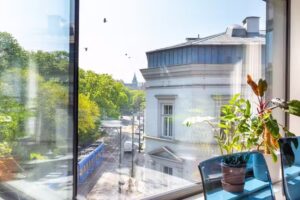
The most frequently highlighted and almost unanimously praised feature of the Wolski Hotel was its location. Perched on a hill in the heart of the Wolski Forest, it offered guests peace, quiet, and direct contact with nature, while remaining within a reasonable distance of Krakow city center and Balice Airport. This made it an ideal choice for those seeking respite from the hustle and bustle of the city. The views from the windows overlooking the forest greenery were undeniable luxury. The building housing the hotel is part of a larger complex in Przegorzały, with an incredibly rich and complex history. It was built during World War II by the Germans as a luxurious military sanatorium called Schloss Wartenberg. This origin gave it an austere, monumental, and for some, even "monastic" character that distinguished it from other hotels in the region. After the war, the property passed into the hands of the state, and then to the Jagiellonian University, further enriching its history. This unique atmosphere, combining history with nature, was a magnet for many tourists.
Two Faces of the Hotel: Room Standard
The issue that stirred the most emotion and polarized opinions was the standard of accommodation offered. Guest reviews paint a picture of a hotel with two distinctly different faces. On the one hand, there were enthusiastic reports from guests who had stayed in the newly renovated rooms. They described them as spacious, smelling new, clean, and finished to a high standard. These guests praised the comfortable beds and additional amenities, such as a kettle with tea and coffee making facilities. For them, staying at the Hotel Wolski was a top-notch experience, and the value for money was excellent.
Unfortunately, there were equally numerous voices of disappointment. Many guests ended up in a section of the property that had long since passed its prime. These rooms suffered from a musty smell, worn-out wooden furniture, and a general lack of attention to detail. Complaints included a non-functioning heating system, which was particularly acute on colder nights, and a lack of basic amenities like air conditioning or a small refrigerator. Reviews also mentioned poorly painted walls and old radiators dating back to the communist era. This glaring inconsistency in accommodation standards made booking a room a bit of a gamble. You might find a fantastic, renovated room, or one in urgent need of a complete overhaul.
Service and Gastronomy at a Plus
In contrast to the inconsistent room standards, the hotel's service was consistently rated very highly. Guests emphasized the professionalism, courtesy, and helpfulness of the staff, who endeavored to address any inconvenience and ensured a comfortable stay . Both the reception and restaurant staff received praise for their dedication and knowledge.
The hotel's culinary offerings were also a strong point. Breakfast, served buffet-style, was described as delicious, fresh, and well-balanced. Many guests also spoke highly of the dishes served in the hotel's "Baszta" restaurant, praising both their taste and presentation. This demonstrates that despite infrastructure issues in the accommodation areas, other aspects of the facility's operation remained at a good standard.
Practical Aspects of Stay and Heritage Summary
When considering the Wolski Hotel from a potential guest's perspective, several practical considerations were important. The ample on-site parking was undoubtedly a convenience for those traveling by car. Access to the city center was easy thanks to a nearby bus stop, but it was worth remembering that buses didn't run until late at night, forcing the use of taxis or Ubers for return trips after dark. While the hotel wasn't a luxury resort , nor did it offer typical villas or cabañas , its forested surroundings offered a semblance of that kind of relaxation.
Ultimately, the Wolski Hotel remains remembered as a place full of contradictions. Its legacy is a tale of extraordinary potential stemming from its phenomenal location and unique history, which was partially hampered by uneven infrastructure investment. For some, it was an ideal posada or hostería in the heart of the forest, offering a comfortable retreat. For others, the experience was disappointing due to the outdated room standard that didn't match the price and the charm of the surroundings. Although the hotel is now closed and its future is uncertain – at some point, a new brand, Forest Hotel, emerged to transform it – its story is an interesting case in the Krakow hotel market. It demonstrates how crucial consistency is and how challenging it can be to maintain a historic property at a competitive level, even if its location is absolutely unrivaled. This wasn't your typical hostal , albergue , or departmental rental; it was a fully-fledged hotel with enormous potential, but its fate veered toward closure.