
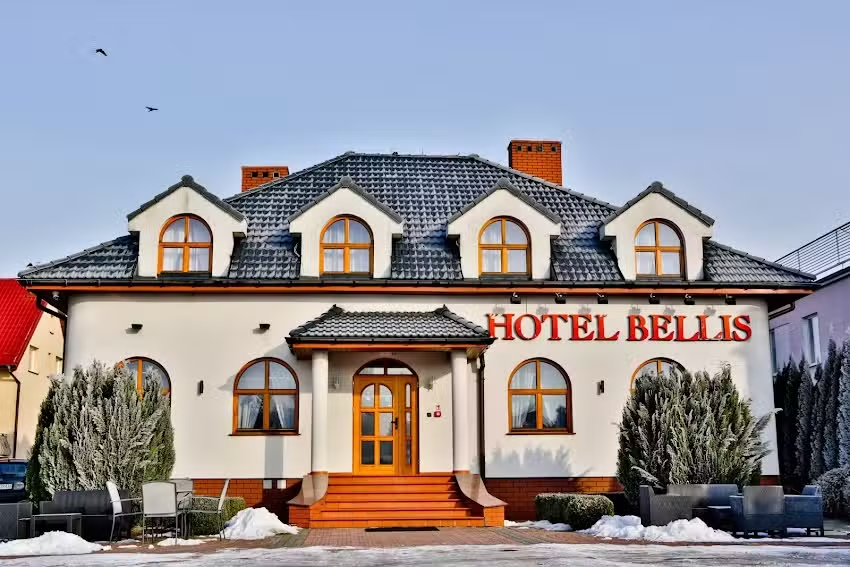
Hotel Bellis Lublin
BackHotel Bellis, formerly located at Dębówka 28B on the outskirts of Lublin, is an interesting case in point in the local hotel market. Although now permanently closed, it has left a rich history in the form of numerous guest reviews that paint a picture of a place full of contrasts. An analysis of its operations is a journey through the strengths and weaknesses that defined this place and can serve as a valuable case study for other accommodations .
Location – an advantage for motorists, a challenge for pedestrians
The location of the Bellis Hotel was one of its most distinctive and simultaneously polarizing aspects. Situated on the outskirts of Lublin, directly adjacent to the S17 expressway, it was an ideal solution for transit travelers seeking a comfortable place to rest without having to enter the crowded city center. The ample, fenced, and free parking was an undeniable convenience, frequently highlighted by guests in their reviews. For sales representatives or families on long journeys, such a hotel was a practical choice.
However, this same location became a problem for guests without a car or those who wanted to actively enjoy Lublin's attractions. As some reviewers pointed out, the nearest store was approximately two kilometers away, making spontaneous shopping difficult. The lack of an on-site restaurant (apart from serving breakfast) further exacerbated this feeling of isolation, forcing guests to plan their meals in advance or use cars or taxis to reach the city center.
Room standard – somewhere between modernity and neglect
The quality of the rooms offered is probably the most divergent point in the reviews of the Bellis Hotel. On the one hand, many reviews, especially more recent ones, enthusiastically described the newly renovated, tastefully and cozily decorated interiors. Guests praised the spaciousness, comfortable, large beds, and functional and clean bathrooms equipped with essential amenities. For many, this standard exceeded expectations for a three-star hotel, making their stay very satisfactory. It was these positive experiences that contributed to the hotel's high average rating.
On the other hand, the property's history also includes extremely negative reviews, which completely contradict this optimistic image. One guest described his experience as a "disaster," citing a room reeking of cigarette smoke, dirty walls, peeling wallpaper, and worn furniture. Others cited details that spoiled the overall impression, such as heavily scaled kettles. Another frequently cited issue was poor soundproofing—thin walls meant noise from neighboring rooms or the hallway was clearly audible, disrupting the peace and quiet of the stay. This mixed experience suggests that standards were inconsistent throughout the property, and satisfaction with the stay may have depended on luck in being assigned a specific room.
Service and support – from professionalism to absurdity
The staff at the Bellis Hotel were another area that received mixed reviews. Most reviews were filled with praise – the staff were described as friendly, smiling, helpful, and professional. Guests appreciated small gestures, such as offering to upgrade a twin room to a double bed or providing an iron and ironing board without any hassle. This kind of approach fostered a positive atmosphere and made guests feel cared for.
Unfortunately, there were also incidents that undermined this image. One guest described an incident in which the hotel canceled a prepaid breakfast, absurdly citing the lack of shopping on Sunday morning. Such an incident in a three-star hotel is unacceptable and demonstrates a serious lack of organization. Another guest noted a receptionist who, during check-in, seemed more interested in the match results on TV than in his duties. Such behavior, while likely isolated, effectively undermined the professionalism of the entire facility.
Breakfast – a tasty buffet with the risk of absence
The buffet breakfast was often cited as a major plus at Hotel Bellis. Guests praised the wide selection of products, their quality, and the lack of quantity restrictions. For many, this was a strong point of the offer, setting a positive mood for the entire day. However, the previously mentioned breakfast cancellation demonstrates that even the best offer is worthless if it isn't implemented reliably.
Summary – The Legacy of a Closed Hotel
The Bellis Hotel wasn't a luxury resort , an exclusive villa , or a budget hostel or albergue . Its ambition was to function as a solid, three-star establishment offering comfortable accommodations at a good price, and it largely succeeded. For many guests, it was a perfect choice – modern rooms , a good breakfast, and convenient parking fully met their needs.
However, the history of this establishment demonstrates how crucial consistency and reliability are in the hotel industry. The widely varying guest experiences, from delight to profound disappointment, indicate a lack of consistency in maintaining standards. Potential guests booking a stay there were taking a risk – they might have found a wonderful, renovated room and enjoyed professional service, but they could also have experienced neglect and unprofessional treatment. In a world where travelers increasingly seek reliable and proven options, such as vacation apartments and brand-name hotels , such unpredictability may have been one of the factors contributing to its closure. Although Hotel Bellis no longer welcomes guests, its history remains a valuable lesson in how even the best assets can be undone by a lack of attention to detail and to each guest.