Mini Zoo Hacienda Alpaka
BackThe Hacienda Alpaka Mini Zoo in Ubiad was a place that evoked a wide range of emotions among visitors during its operation. On the one hand, it offered a unique opportunity for close contact with a variety of, often exotic, animals, attracting families with children and fauna enthusiasts. On the other hand, numerous guest reports point to serious issues with customer service and organization, which ultimately may have contributed to its closure. Currently, the facility is marked as permanently closed, and this article summarizes the experiences and opinions about it, which can provide valuable lessons for other businesses in the tourism industry.
Main Attraction: Animal World at Your Fingertips
Undoubtedly, the greatest asset of Hacienda Alpaka was the concept of a mini zoo, where interaction with the animals wasn't limited to observing from behind a fence. Guests, including the youngest ones, had the opportunity to pet and sometimes even hold some of the creatures. Reviews often emphasize that the animals seemed tame and eager to interact, making the visit an unforgettable experience. Among the zoo's residents were not only alpacas but also many other interesting species not typically encountered in similar facilities.
Positive reviews consistently highlight one person – a young guide, likely the owners' son, whose passion and vast knowledge of animals made a profound impression on visitors. His commitment and the way he spoke about his charges demonstrated how important they were to him. For many guests, his stories and love for the animals were the highlight of their visit, balancing other, less positive aspects of the place's operation. This confirms the crucial role played by dedicated staff in this type of operation.
Serious Concerns: Service and Organizational Issues
Unfortunately, enthusiasm for animal contact was often tempered by experiences with facility owners. An analysis of reviews reveals a recurring pattern of complaints about unprofessional, and often impertinent, customer service.
Startup Problems: Entry and Payments
Even the very beginning of the visit was problematic for guests. It was reported that to enter the zoo, one had to ring the bell and wait at the gate, creating an awkward situation and the impression of being an intruder. Once contact was established, another problem arose: payment. The facility only accepted cash, which is a significant obstacle these days. One visitor described an instance where, when asked about card payments, the owner responded with resentment, suggesting that, given the impending war, everyone should carry cash, citing information from a popular online portal. An offer to pay with BLIK was also rudely rejected, with the excuse that the owner didn't know anything about it and that his wife was tired from work. This attitude effectively discouraged potential customers even before they entered the building.
Controversial Approach to Guests
Visitor accounts paint a picture of the owners as cold, and sometimes even rude. There are instances where guests felt condescending or suspicious. One reviewer recalls being observed after paying the entrance fee (without receiving a receipt; the money was deposited into a personal purse), and then one of the employees asked him if he had actually paid, pointing the finger at the owner. This type of behavior is unacceptable and demonstrates a complete lack of professionalism. Other reviews mention sarcastic comments from the owner and the cold and aloof attitude of his wife, who would sometimes speak inappropriately to guests. This approach not only spoils the atmosphere of the visit but also builds a negative reputation, which spreads rapidly in the internet age.
Animal Welfare and Value Proposal Issues
Although most reviews suggest that the owners loved their animals, there were also some concerns. One positive review noted that some cages and enclosures seemed too small for the species housed within. This is an important sign that even with significant emotional investment, infrastructure must meet appropriate standards. Opinions were also divided on the price (a 40 PLN ticket was mentioned). Some considered it an attractive price for such close contact with the animals, while others considered it excessive, especially compared to other, better-organized attractions in Poland that offer much more for a similar price.
The Unclear Question of Accommodation
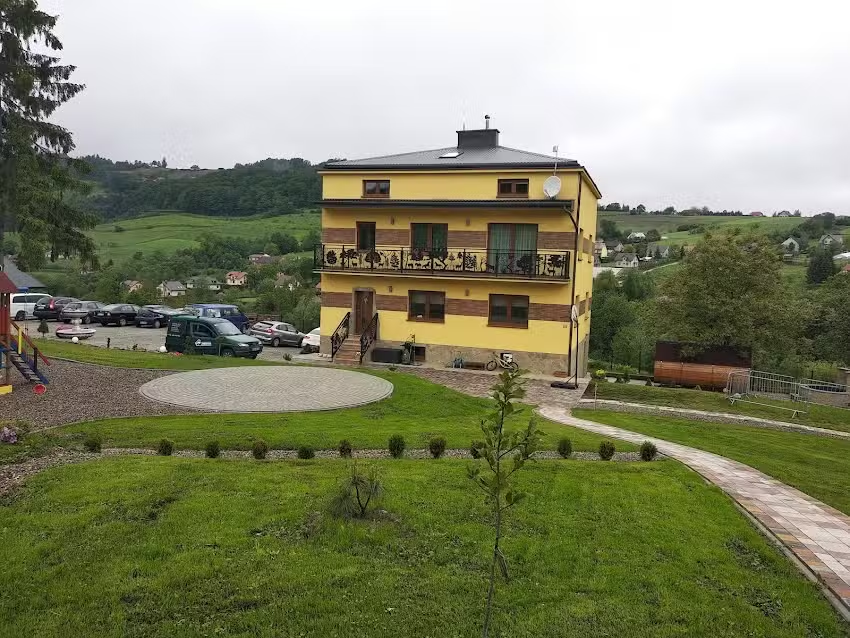
An interesting aspect of Hacjenda Alpaka's operations is the fact that in official classifications, such as Google Maps, the property was marked as offering accommodation . This could suggest to potential tourists that it was a place where one could not only spend a few hours but also book accommodation . However, attempts to find any detailed information on this topic were unsuccessful. There are no offers for rental rooms , holiday apartments , or even simple cottages . Tourists seeking options in the region such as hotels or cozy guesthouses may have felt misled. It's difficult to determine whether the hospedaje's offer was merely a plan for the future or if the category was incorrectly assigned. Regardless of the reason, as a resort or inn offering accommodations, Hacjenda Alpaka lacked transparency. Potential guests seeking a luxury villa , a budget hostel , a tourist shelter , or a functional apartment found nothing concrete.
Summary: A Story of Untapped Potential
The Hacjenda Alpaka Mini Zoo is an example of a venture with enormous potential that was squandered by the human factor. A fantastic idea, unique animals, and the opportunity for direct interaction with them could have made this place a true gem on the region's tourism map. Unfortunately, repeated complaints about poor customer service, a lack of professionalism in basic matters such as payment and greeting guests, and a general atmosphere of inhospitability thwarted this potential. The permanent closure of the facility, while a loss for animal lovers, seems a logical consequence of conducting business in a way that ignores the fundamental principles of building positive customer relationships. The story of Hacjenda Alpaka should serve as a warning: even the best product cannot survive without respect for the people who pay for it.